

Are All Plant Milks Really Interchangeable?
A BTS look at this week's tests & the surprising differences between soy, oat, almond, and coconut milk.
Often in vegan baking, recipes will say to use any plant milk you have on hand. And sometimes, that’s completely fine.
But this week reminded me that sometimes the type of dairy-free milk matters a lot.
My fridge is currently a mess of jars and bowls. If you opened it, you’d probably be very confused as it’s mostly various test batches of mousse and custard. They look random, but they’re the base for some bigger summer recipes I’m developing!
One recipe in particular is inspired by those soft, custard fruit buns I keep seeing everywhere online. Traditional versions usually rely on eggs, milk, and butter.
The first hurdle for this recipe was figuring out the custard filling, and very quickly, that turned into a bigger question:
Does the type of dairy-free milk actually matter?
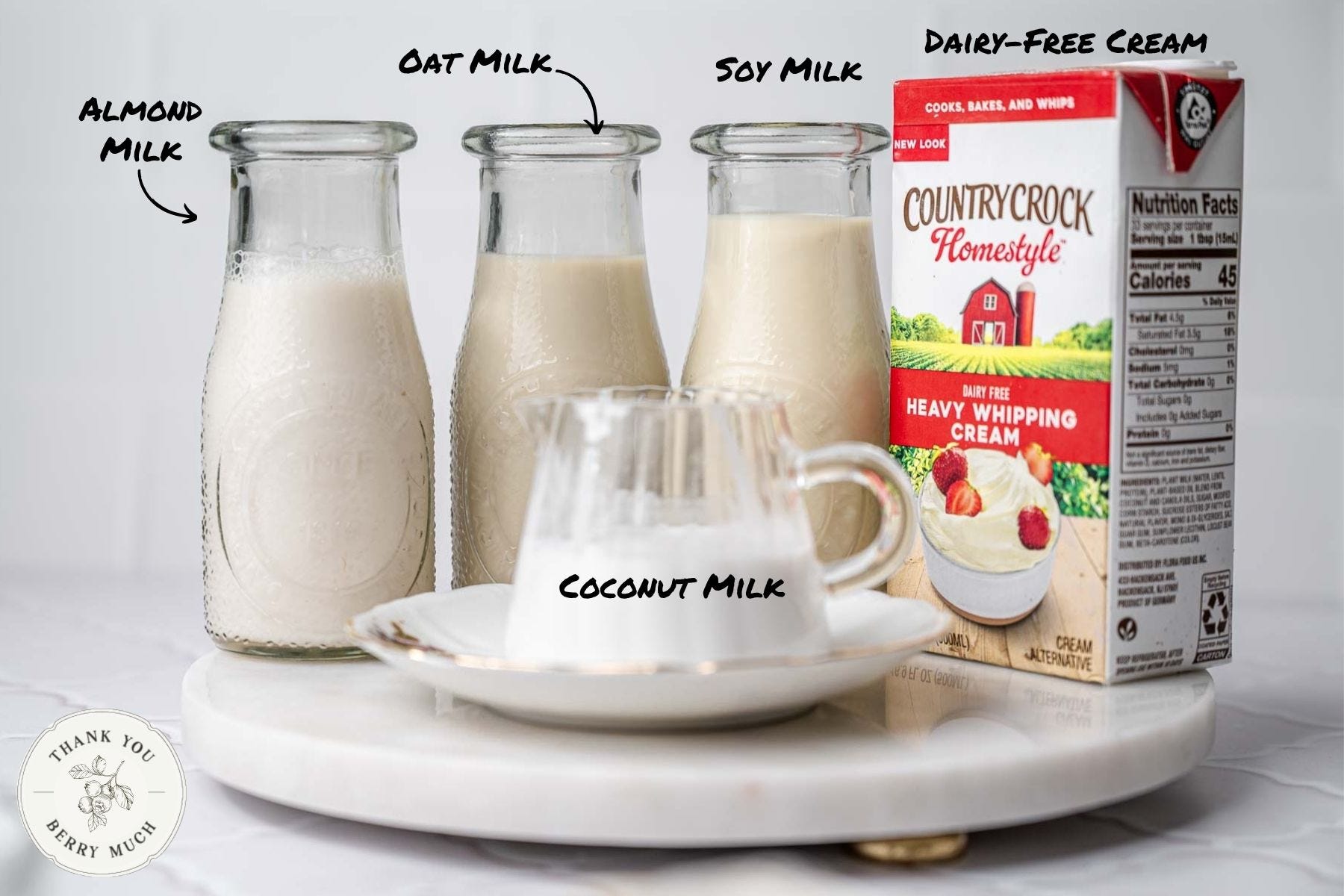
My starting hypothesis was yes, and that soy milk would probably work best. Nutritionally, it’s the closest to dairy milk, and based on previous recipes like my dairy-free buttermilk, vegan cream cheese and mascarpone, I suspected it would provide the best set.
To put that theory to the test, I made the same custard several times, swapping in different dairy-free milks and comparing the results side-by-side.
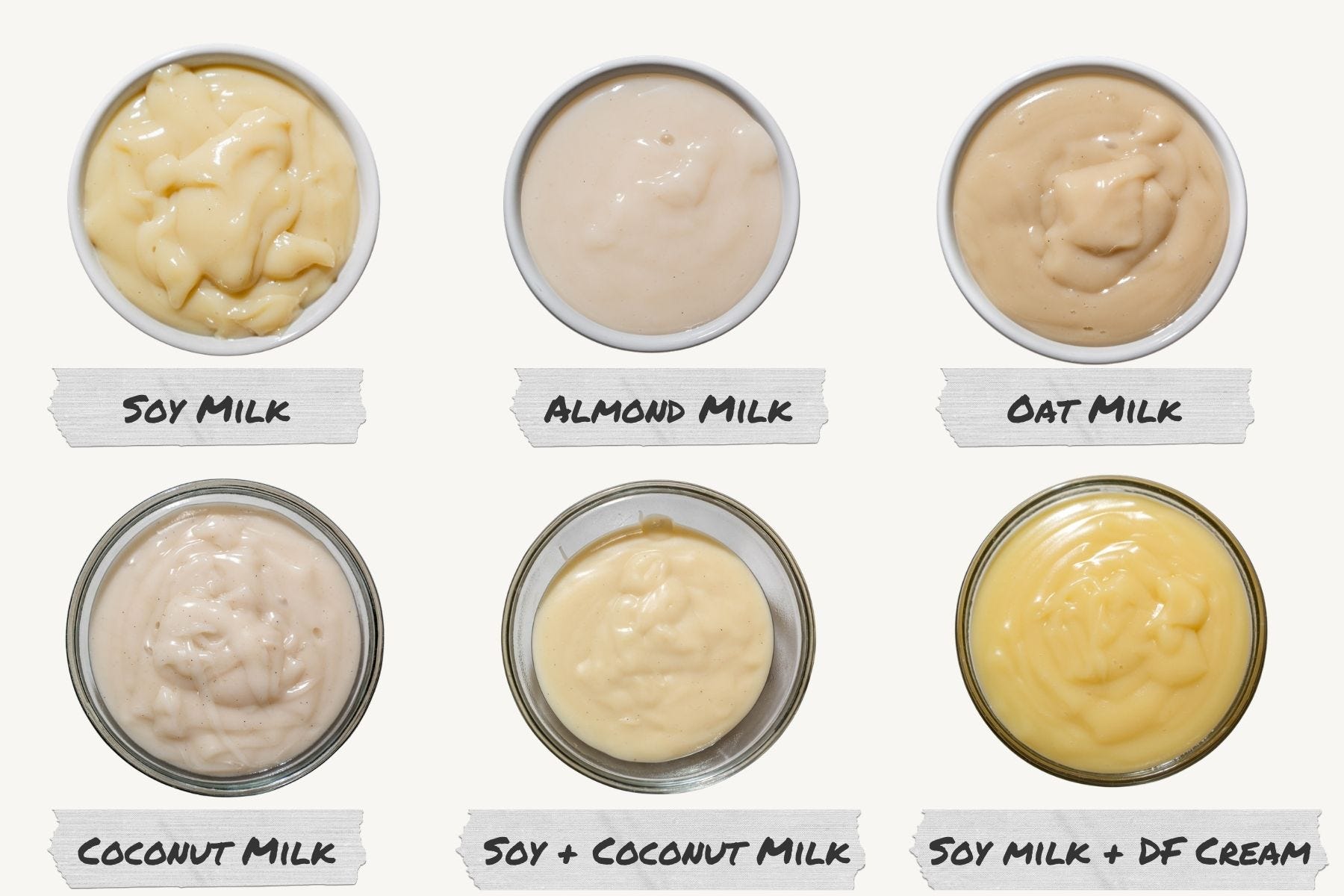
Some of the findings:
Soy Milk: As suspected it was very reliable. It set perfectly overnight (great for pie, tarts and more) and maintained that creamy texture I was aiming for. It was a bit one dimensional in flavor which could be fixed with some add-ins.


Almond Milk: Set firm, but too gel-like. It had a bit of an agar/Jello like mouthfeel.
Oat Milk: A total failure. It thickened on the stove, then turned loose after chilling. This surprised me a bit because I’ve had success with oat milk in puddings prior to this. For this test though, I used a different shelf-stable brand than I usually opt for which I believe was the downfall. (It was Planet Oat Extra Creamy)
I’ll have to retest with a few different brands in the future.


Coconut Milk: Rich and creamy with a slight coconut flavor. Very rich, but set inconsistently- firm in some areas and looser in others.
Coconut Milk + Soy Milk: A good combination of creaminess and stability with a more neutral flavor.


Soy Milk + Dairy-Free Heavy Cream: My favorite. The color was a deep yellow, the flavor was complex, and it had a mouthfeel like real custard. I used Country Crock Dairy-free Heavy Whipping Cream.
My jaw actually dropped with how good it was.


It had this rich yellow custard color, which surprised me because the cream itself was bright white when cold. My best guess is that this came from the beta-carotene in the plant cream (which is a natural yellow-orange pigment often used for color).
It tasted the most like classic custard: rich, smooth, creamy, and a little more complex. It did have a bit of weeping on top after chilling, but it was most likely from condensation or covering it while still a little warm.
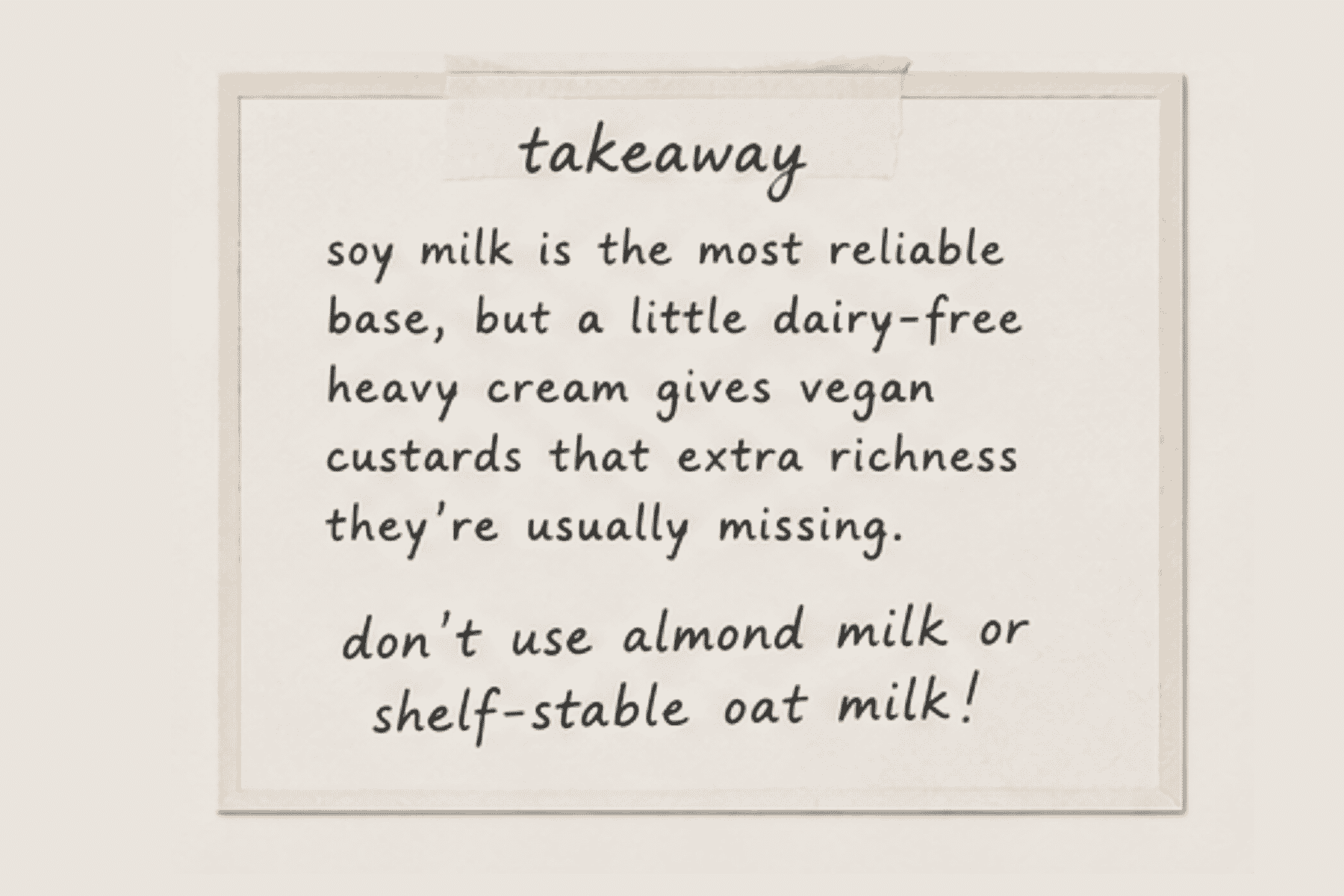
This test was a good reminder that not all plant milks behave the same way. If a recipe only calls for a splash, you can usually use whatever you have on hand. But when the milk is doing most of the heavy lifting- like it is in custard, pudding or tart fillings- small differences in protein, fat, and stabilizers can have a big impact on the final result.
Next week, I’m testing this as a filling for the custard buns to see if it holds its shape while piping and baking. Final recipe coming soon! I’ve also been testing a chocolate mousse, but I’ve babbled enough for one weekend. More on that later.
Let me know below- what’s your favorite plant milk and how do you use it in vegan baking/pastry?
⭐️ Have you tried one of the recipes mentioned above (or another from the blog)? A quick star rating or comment makes a huge difference! It supports Thank You Berry Much and helps other readers find recipes they’ll love too. ⭐️

my favorite is pistachio.
I appreciate the care you took to look at this issue. However, and this comes up for me a lot since people frequently use soy for the reasons you mentioned, where does this leave us who can't have soy???