

A better vegan buttermilk + BTS of this week's testing
Why the classic swap separates… and the one ingredient that fixes it.

Hi friend,
If you’ve been vegan or dairy-free for a while, you’ve probably made the classic plant milk + vinegar “buttermilk” trick at least once. I definitely have used this many, many times over the years.
But this week, while testing my classic vegan pancake recipe (coming next week 👀), I realized this swap could definitely be improved to create a better buttermilk substitute! That realization sent me down a full buttermilk science rabbit hole… so bear with me while I show you some behind-the-scenes testing.

What Buttermilk Does in Recipes
Traditional buttermilk is cultured, not just milk mixed with acid. And it plays three really important roles in baking and cooking:
Acidity: Often it reacts with baking soda to create lift
Texture & Structure: Adds protein and fat that help create softer crumbs and smoother sauces
Flavor: Provides that mellow, cultured taste
The classic vegan shortcut (plant milk + vinegar) checks one of those boxes really well: acidity. But while testing my pancakes, I found it struggles with the other two.
Where The Classic Shortcut Falls Short
When you mix plant milk and vinegar, it curdles and separates quickly. (The acid causes the proteins to denature, which creates curds.) It also tends to be lower in fat compared to traditional buttermilk, which can affect tenderness and mouthfeel in some recipes.
After testing several variations, the biggest improvement came from adding dairy-free yogurt.
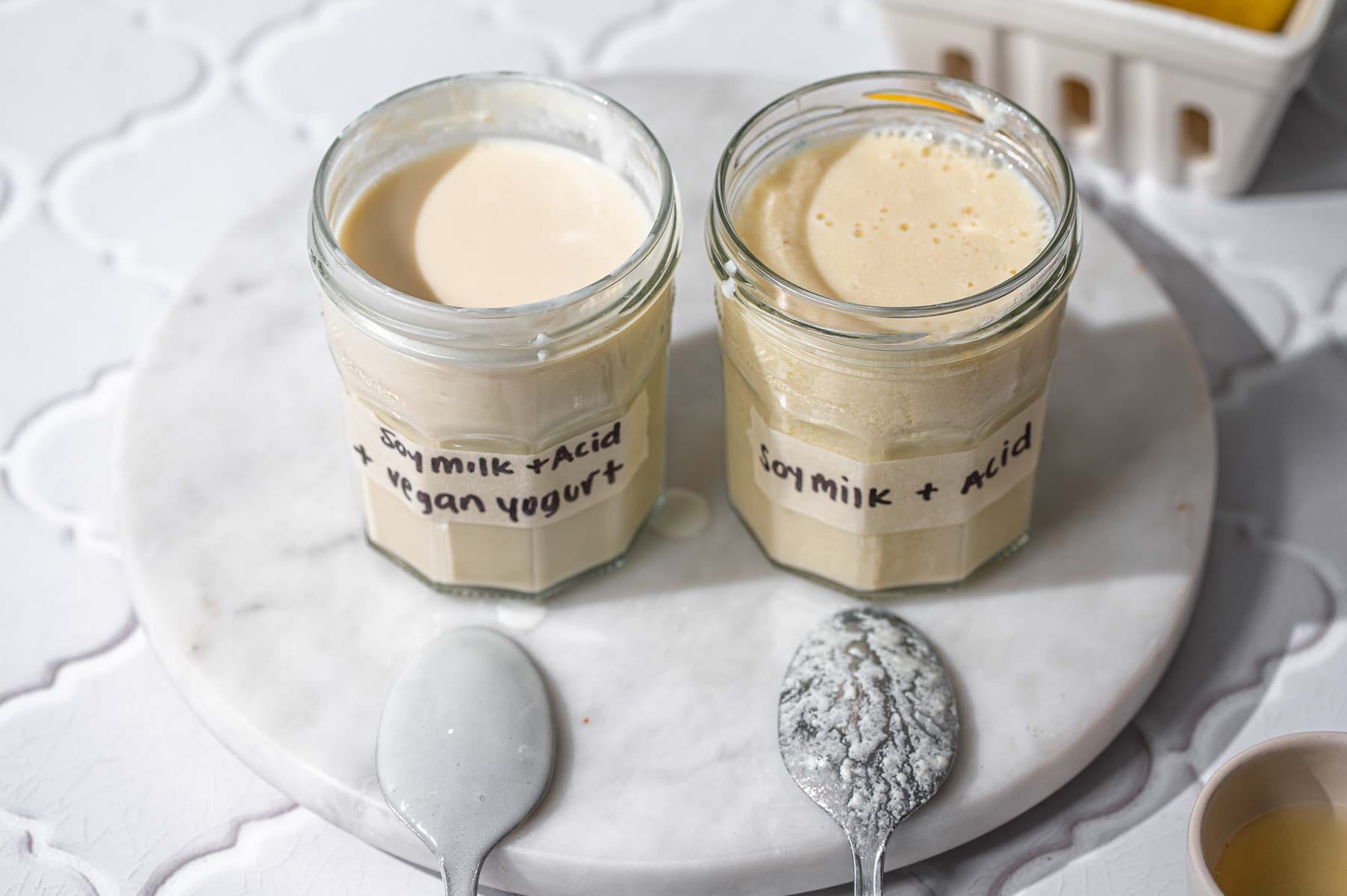
The version with dairy-free yogurt stayed smooth and uniform, while the simple vinegar version separated and stayed grainy. Dairy-free yogurt helps:
Thicken the mixture
Emulsify proteins and fats (so it’s smooth & creamy!)
Create a cultured/fermented taste
Basically… it helps the vegan version behave much closer to traditional cultured buttermilk.


Yes… I Measured The pH 😅
I wanted to make sure the acidity matched traditional buttermilk closely enough for baking performance. That meant breaking out the pH meter and testing different acids.


Lemon juice had a lot of variation from lemon to lemon. It creates a bright, citrusy tang (citric acid).
Apple cider vinegar was much more consistent from brand to brand. It creates a slightly fruity, lightly funky tang (acetic acid).
Lactic acid requires only a small amount and creates the closest flavor match to cultured dairy buttermilk.
This ratio has the closest acidity to traditional buttermilk:
1 cup soy milk + ¼ cup dairy-free yogurt + 1 tablespoon lemon juice or vinegar
You can read the full post and grab the printable recipe w/ extra tips here:
It takes about 2 minutes to make and works in everything from baked goods to dressings!
⭐️ Have you tried this recipe (or another from the blog)? A quick star rating or comment makes a huge difference! It supports Thank You Berry Much and helps other readers find recipes they’ll love too. ⭐️


Blog | E-Cookbook | Instagram | Pinterest